Orthopedic Bone Plating & Locking Screw Fixation: Titanium vs. 316L Stainless Steel in Trauma Surgery
Biomechanical Stability, Stress Shielding, and Anatomical Pre-Contouring for Distal Radius & Long Bone Fractures
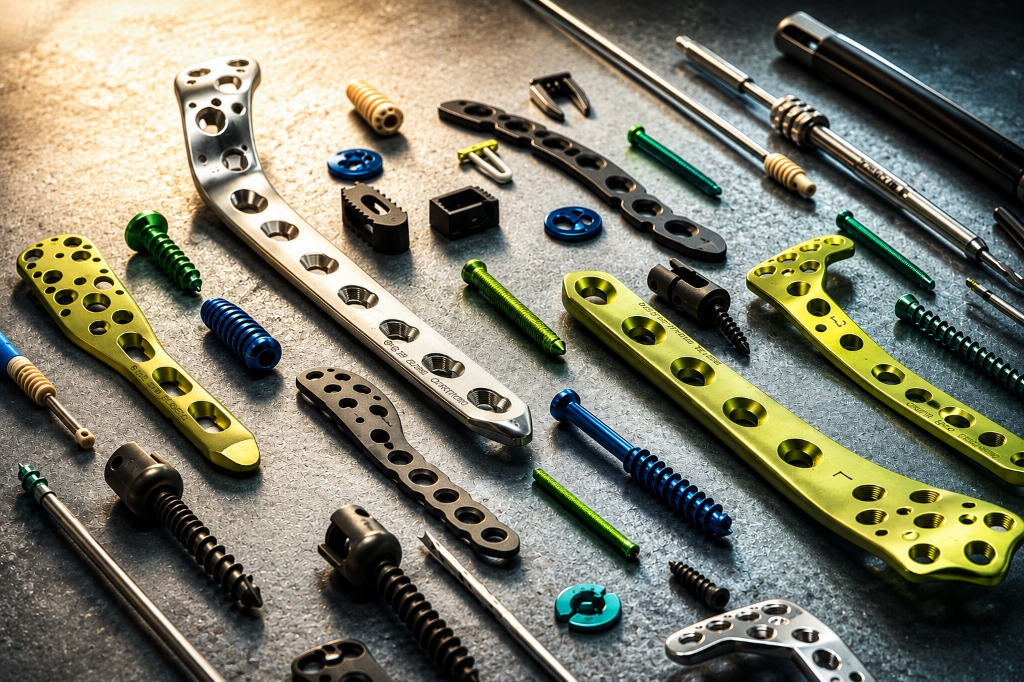
The evolution of internal fixation has transitioned from traditional dynamic compression plates to anatomically contoured locking plate systems (LCP). By creating a fixed-angle construct between the screw head and the plate threaded combi-hole, locking systems preserve periosteal blood supply and provide exceptional stability in osteoporotic and comminuted fractures.
When choosing between Medical Grade Pure Titanium (ASTM F67 / F136) and 316L Stainless Steel (ASTM F138), surgeons evaluate elastic modulus and biocompatibility. Titanium has a lower modulus of elasticity closer to human cortical bone, reducing the risk of stress shielding and promoting secondary callus formation.
SubMedOrtho manufactures low-profile Distal Radius Plates (2.0mm thickness) and Small Fragment Locking Systems (2.7mm and 3.5mm) with rounded, highly polished edges to minimize soft tissue and extensor tendon irritation.
Each screw thread and plate hole undergoes micro-optical optical profile projection to verify pitch accuracy, ensuring smooth cross-threading prevention and rapid intra-operative seating for trauma orthopedic surgeons.
All instruments mentioned in this technical paper are manufactured in accordance with strict dimensional blueprints, ASTM stainless steel standards, and batch hardness testing protocols in Sialkot, Pakistan.